A Guide to Creating a Family Photo Book That Actually Gets Passed Down
Learn how to create a family photo book that will be treasured for generations, from selecting the right photos to choosing the best materials.
There's a difference between a photo book and an heirloom. One sits on a coffee table for a season. The other gets pulled out at every family gathering, gets handed down to grandchildren, and carries the emotional weight of a family's entire history. This guide is about making the second kind.
At Lakeside Photoworks, we've helped Louisiana families create photo books for over 50 years — and we've seen what makes them last, and what makes them forgotten in a drawer. Here's what we've learned.
Start With a Story, Not a Dump
The most common mistake people make when building a photo book is uploading every picture they have. The result is overwhelming, and honestly, not very interesting to anyone other than the person who made it. Instead, ask yourself: what's the story this book is telling? Is it a year in your family's life? A tribute to a grandparent? A chronicle of your child's first five years? The best photo books have a clear through-line. Once you know the story, you'll know which photos belong and which ones to leave out.
Curate with Intention
A 60-page book with 60 strong images will be read cover to cover. A 120-page book with 200 mediocre ones won't. Push yourself to cut. If a photo is blurry, redundant, or doesn't add anything to the story, leave it on the hard drive. The photos that make the cut should earn their place.
Don't just think about what looks good — think about what feels true. A candid of your grandmother laughing at the kitchen table will outlast any perfectly posed portrait.
Think About Sequence Like a Book Editor
A great photo book has rhythm. It opens strong, builds through the middle, and ends with something resonant. Don't just organize by date — think about visual contrast (a wide landscape next to a tight portrait), emotional pacing, and what the eye naturally wants to do as it moves across a page.
Give special photos room to breathe. A full-page or double-page spread signals to the reader that this piece matters!
Write the Captions
Captions are the part most people skip, and the part future generations will value most. Names, dates, places, and a sentence of context transform a photograph into a document. "Christmas 1987" is fine. "Christmas 1987 — the year Dad surprised us with a puppy and Mom pretended to be upset" is something your grandchildren will read out loud.
For a book intended to be passed down, consider adding a short introduction: who made this book, why, and for whom. That simple act of intention makes the book feel like the heirloom it is.
Choose the Right Materials
This is where a lot of well-intentioned photo books fall short. A book printed on thin, glossy paper through a discount online service may look fine on screen, but it won't feel substantial. The colors will shift over time, and it likely won't survive decades of handling.
For a book meant to last generations, invest in quality:
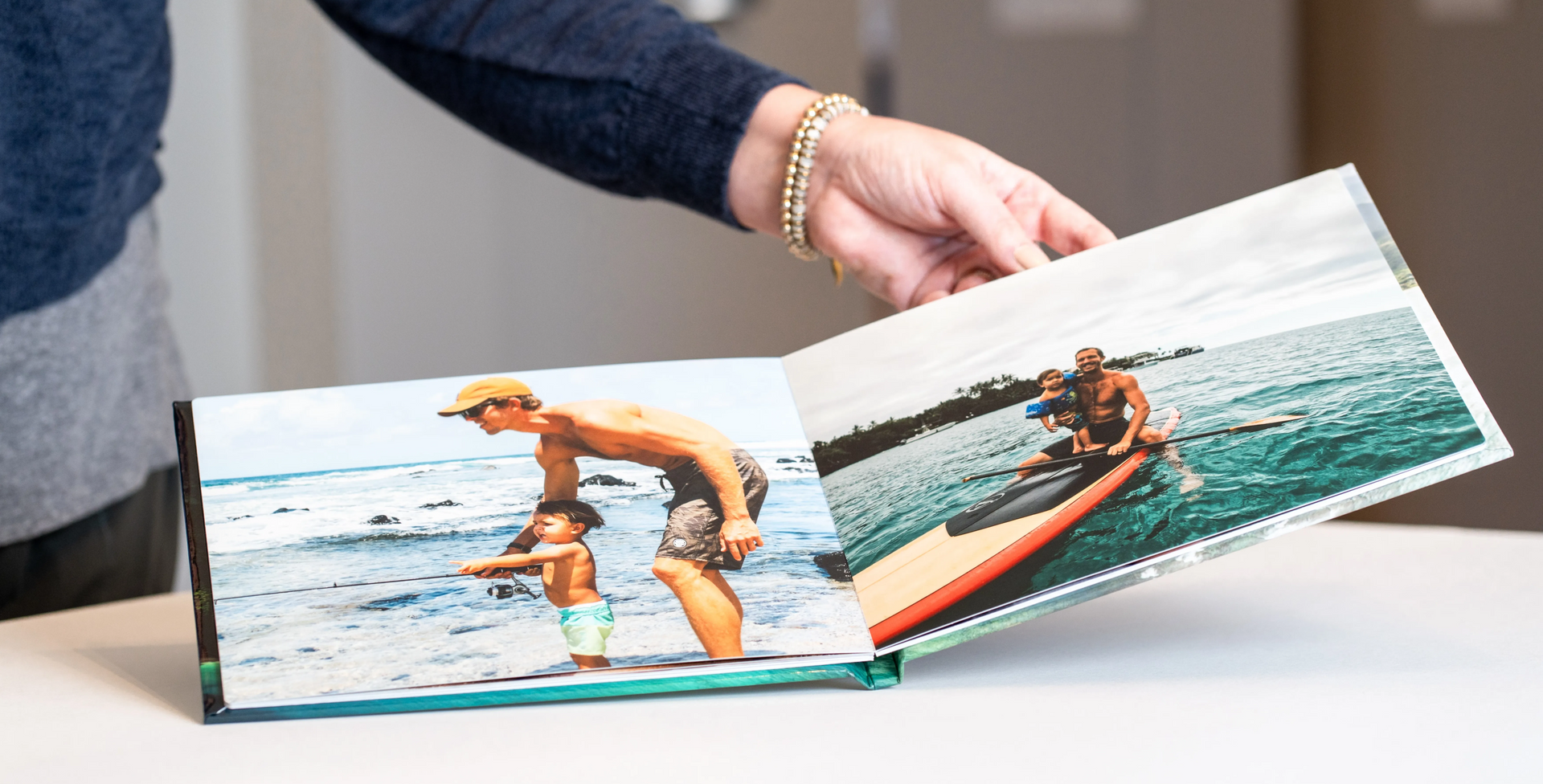
Paper: Lay-flat pages are worth it. They open completely flat with no gutter loss, which matters enormously for photos that span both pages. Thick, luster paper has a tactile quality that makes a book feel like it was meant to be touched.
Printing: Professional printing with color calibration and a specialist reviewing your images before they go to press makes a visible difference. At Lakeside Photoworks, every order is reviewed by a print specialist before production. That extra set of expert eyes catches exposure issues, color casts, and resolution problems before they're permanently on the page.
Make More Than One Copy
The practical advice that's easy to overlook: make at least two copies. One to display or give as a gift, one to store carefully. Fires, floods, and hurricanes are real — especially in Louisiana. A second copy stored with a different family member means the book survives whatever one household might not.
And speaking of floods and fires: a digital backup of all the original files is not the same as a physical book, but it's an important safety net. Before you send your book to print, make sure your images are backed up somewhere safe.
When You're Ready to Print
At Lakeside Photoworks, we print photo books that are genuinely built to last with archival-quality materials, professional color review on every order, and lay-flat binding options that keep your images looking exactly as they were designed. Whether you're starting from scratch or already have a design ready to go, we're here to help.